POLS 681 — International Security
Spring 2026 | Fri 9:30am-12:10pm | DuSable 464
Instructor
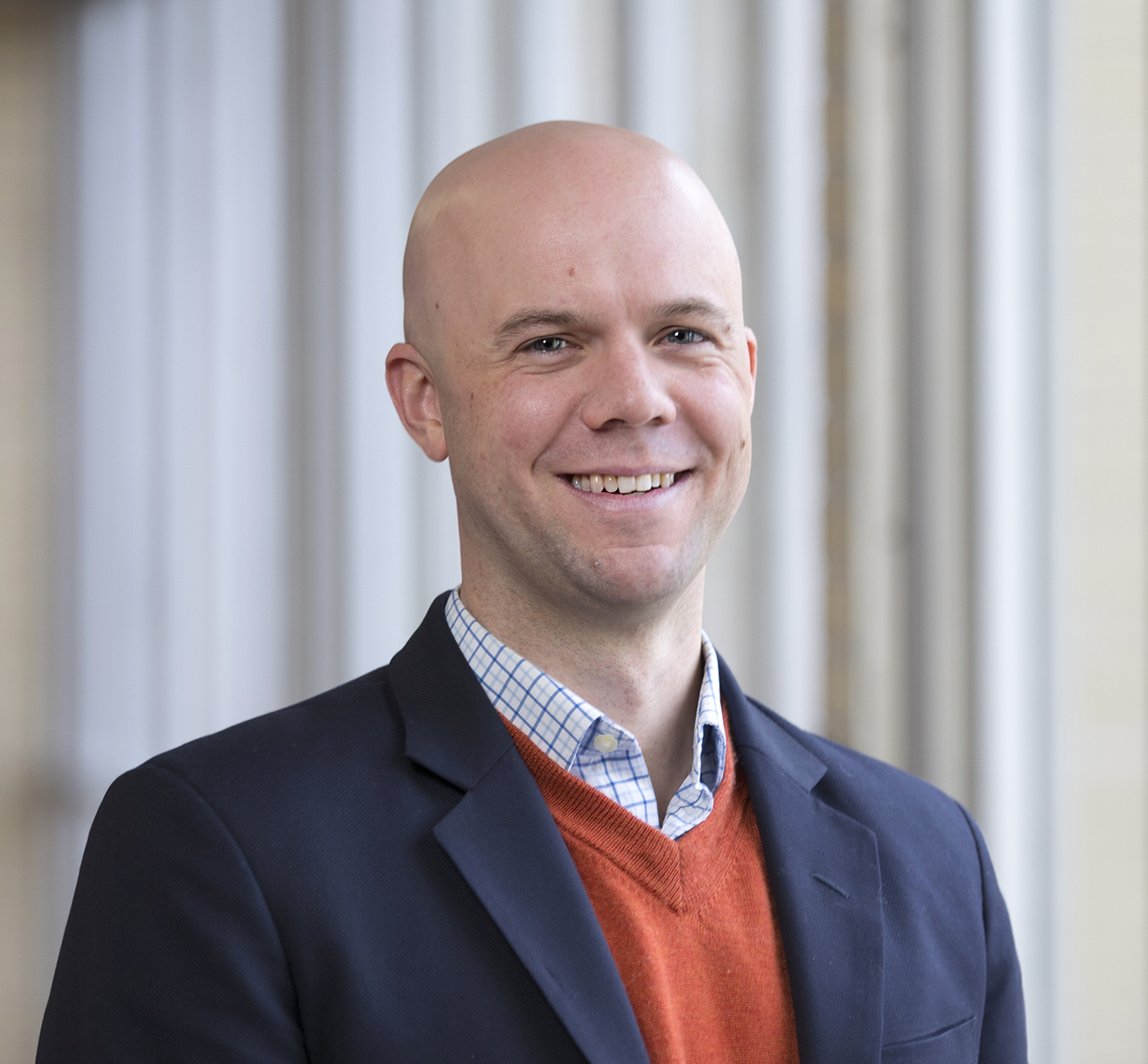
Dr. Ches Thurber
414 Zulauf Hall
cthurber@niu.edu
Office Hours: Tu/Th 12:00 - 1:30pm
Schedule an appointment
What is this course about?
This course is a graduate-level survey of social scientific research on peace, conflict, and security. It is intentionally broad, attempting to encompass several different “subfields within the subfield.” These sometimes go by different names such as international security, security studies, conflict processes, and peace science. More specifically, this seminar will include the examination of both interstate and civil conflicts as well as bridge quantitative and qualitative methodological approaches. We will examine the various conceptualizations and definitions of conflict, theories about the causes of violence at both the sub-state and interstate levels, and variation in the forms that conflict can take. This is one of the four core courses for preparation for the Ph.D. candidacy exam in international relations. This syllabus (including the recommended readings) constitutes the reading list for the international security portion of the exam. The course also serves students who are approaching the study of global security from a policy perspective. We will focus on the relationship between scholarship and policy, what research tells us about what kinds of policies “work,” and what areas are in need of further research to meet pressing real-world challenges.
Texts
Students are required to obtain a copy of the following text:
- Dan Reiter, ed. Understanding War and Peace, 2nd Edition. Cambridge University Press, 2023.
All other readings are available through a class Zotero shared collection. Alternatively, students may locate materials on their own through the NIU libraries.
Evaluation
Class attendance, preparation and participation (20%): The time we spend in class is for me the most important of this course. As such, punctual attendance is mandatory. But more important than just being present is that you are actively engaged. I expect that you have done the readings and that you try to participate in discussion each and every class section.
Reading Analyses (20%): For each week, you will be required to draft written summaries on each of the readings. Templates will be provided. For those students planning on taking a candidacy exam in IR, these written summaries will prove invaluable.
Final Project (40%): You will produce a “half” research paper, in the range of 4k-6k words. By this I mean that you will either focus on a puzzle, theory, and research design (without actually conducting the empirical work), or you will provide only a brief theoretical motivation before presenting an in-depth case study or analysis of quantitative data. You may also choose to complete a “full” paper in conjunction with another course like POLS 603 or 642. I encourage this option, but you must seek permission from both me and the instructor of the other course. You will produce two drafts of the paper, the first of which will be reviewed by me and another student. You will then have the opportunity to produce a revised version of the paper. Each version is worth 20 percent of your grade.
Peer Review Essay (20%): You will read another student’s initial research paper draft and write a 1,000 word review memo as if you had been asked to read the paper as a submission to a professional political science journal. Your memo will be sent to the author, but the identities of both author and reviewer will be kept anonymous. Of course, in a small class, it is entirely possible that you may be able to figure out the identities of either the author or reviewer. This is often true in professional practice as well. But I expect that you not engage in deliberate efforts to ascertain or disclose identities, as is the professional norm.
Grading Standards
As a graduate student, you are at the point in your professional development where it is your written work itself that matters (and how that work is received by a broader scholarly community) more than the grade arbitrarily assigned by a single cantankerous professor. Nevertheless, grades can serve as a helpful signaling device for your own self-assessment, for departmental funding decisions, and to admissions committees at PhD programs (for MA students planning to continue on…). The scheme below is taken from Prof. Kyle Beardsley in the political science department at Duke University with some modifications to adapt to our departmental norms and my own personal views. It may also be helpful to think about the grading distributionally. In the past, I have generally awarded between 1 and 3 straight As per graduate seminar. The modal grade has been an A-, with a few Bs and B+s.
A : Exceptional Performance. Outstanding work on all course-related tasks at a level that distinguishes the student from other members of the class. A comprehensive and incisive command of the issues, literature, and substantive information relevant to the course. The ability to master and integrate large amounts of factual material and abstract theories.
A- : Very Good Performance. Consistently strong work on all course-related tasks. A command of the issues, literature, and substantive information relevant to the course. Understands well and can integrate the relevant factual and theoretical material central to the course.
B+ : Good Performance. Solid work on all course-related tasks. A good grasp of the issues, literature, and substantive information relevant to the course. A very good command of factual and theoretical material, and some capacity to integrate the two.
B : Decent Performance. Generally consistent work on most course-related tasks. A general understanding of the issues, literature, and substantive information relevant to the course. An acceptable understanding of factual and theoretical material, but limited evidence of the capacity to integrate the two.
B- : Barely Satisfactory Performance. Mostly satisfactory work on course-related tasks, but with notable deficiencies. A general understanding of the issues, literature, and substantive information relevant to the course. Understands at a basic level the facts and theories related to the course, but with clear gaps, errors, or incomplete work. Grades lower than this represent unsatisfactory work.
Course Policies
Committed to your success: Beyond all else, I am committed to the success of every student in this class. I encourage everyone in the class to reach out to me if there is anything I can do in terms of the delivery of the course that would help you be more successful. I might not always be able to make it happen, but I will never discourage you from asking.
Names and Pronouns: It is my personal policy to allow graduate students to call me by my first name, “Ches.” This reflects the idea that I view you all as colleagues-in-training. I usually use the he/him/his pronouns to refer to myself, but am equally comfortable being referred to with they/them/their. Please let me know how you prefer to be addressed, both in name and pronoun, if it differs from what is in the college directory. I will make every effort to address you in the way you wish to be addressed. Please try and do the same for your fellow classmates, as well as for other faculty in the department.
Americans with Disabilities Act and Non-Discrimination Statement: If you need an accommodation for this class, please contact the Disability Resource Center as soon as possible. The DRC coordinates accommodations for students with disabilities. It is located on the 4th floor of the Health Services Building, and can be reached at 815-753-1303 or drc@niu.edu. Also, please contact me privately as soon as possible so we can discuss your accommodations. Please note that you will not be required to disclose your disability, only your accommodations. The sooner you let me know your needs, the sooner I can assist you in achieving your learning goals in this course.
Mental Health and Well-being: Graduate students experience a range of academic, social, and personal stresses that at times can be overwhelming. You are not alone. Well-being at NIU offers resources, programs, and services. If you or someone you know need assistance with comprehensive or crisis mental health support, Counseling and Consultation Services (CCS) at 815-753-1206 is ready to help 24 hours a day, 7 days a week. Additionally, the National Suicide Prevention Lifeline can be reached at 988.
Academic Integrity: Good academic work must be based on honesty. The attempt of any student to present as his or her own work that which he or she has not produced is regarded by the faculty and administration as a serious offense. Students are considered to have cheated if they copy the work of another during an examination or turn in a paper or an assignment written, in whole or in part, by someone else. Students are guilty of plagiarism, intentional or not, if they copy material from books, magazines, or other sources without identifying and acknowledging those sources or if they paraphrase ideas from such sources without acknowledging them. Using Artificial Intelligence tools in a manner not permitted by the instructions for an assignment is also considered an act of academic dishonesty. Students guilty of, or assisting others in, either cheating or plagiarism on an assignment, quiz, or examination may receive a grade of F for the course involved and may be suspended or dismissed from the university.
This is an issue I take seriously. Unfortuntely, it has increasingly become an issue in the graduate political science program. The creation of one’s own original work is the core of what a university education is all about. Falsely claiming credit for words or ideas that are not your own undermines that core. I will use software that tracks plagiarism as well as for similarities with classmates’ or even your own prior work. When work looks suspicious, I will often use additional measures to identify the original sources of plagiarized text. In this course, academic dishonesty will always result in an F on the assignment and notification to the department chair and director of graduate studies.
Artificial Intelligence: Generative artificial intelligence (AI) is almost certainly going to become a valuable tool for academic researchers as well as policy practitioners. Used well and in combination with strong critical thinking and writing skills, it may be able to help you be a better student and professional. The challenge, however, is that reliance on AI tools can short-circuit the learning process, preventing you from developing the skills and knowledge you need to be successful. Furthermore, AI is fraught with ethical, environmental, social, and intellectual property issues (see some thoughtful commentary by Prof. Andrew Heiss at Georgia State here).
For each assignment, I will provide specific instructions regarding the permissible and prohibited uses of AI tools. In general, the following principles will apply:
The use of direct or paraphrased text from an AI source is explicitly prohibited in all cases. In cases where AI detectors identify a high probability of AI-generated content, the student will be invited to an oral examination of the content.
Students may use AI tools to make grammatical/stylistic suggestions for text originally written by the student.
Students may use AI as a research tool to identify sources and arguments within the literature. In such cases, students must ALWAYS identify, read, and cite the original source. Students will be held responsible for any incorrect information or hallucinated sources that come from AI tools.
Class Schedule
Students are expected to read the following before Friday’s class session. This syllabus, including the recommended readings and book list, constitutes the reading list for the subtopic of International Security for the PhD Candidacy exam in IR. An asterisk next to a journal article indicates that the author has expanded the idea into a book, included in the book list at the end of the syllabus. PhD students preparing for the candidacy exam should be familiar with the book as well.
Week 1 (Jan. 16): Theory, Method, and Purpose in the Study of Security
- “Introduction” by Dan Reiter in UWP
- Sarah McLauchlin Mitchell and John A. Vazquez “Introduction,” in Conflict, War, and Peace: An Introduction to Scientific Research (CQ Press, 2013).
- Bruce W. Jentleson “The Need for Praxis: Bringing Policy Relevance Back In,” International Security 26, no. 4 (2002): 169–83, https://www.jstor.org/stable/3092106.
- Raju G. C. Thomas “What Is Third World Security?” Annual Review of Political Science 6, no. 1 (June 2003): 205–32, https://doi.org/10.1146/annurev.polisci.6.121901.085731.
- Jack Hoagland et al. “The Blind Men and the Elephant: Comparing the Study of International Security Across Journals,” Security Studies 29, no. 3 (May 26, 2020): 393–433, https://doi.org/10.1080/09636412.2020.1761439.
Recommended Readings
- Kenneth N. Waltz Man, the State, and War: A Theoretical Analysis (New York: Columbia University Press, 2001).
- Johan Galtung “Violence, Peace, and Peace Research,” Journal of Peace Research 6, no. 3 (1969): 167–91.
- J. David Singer “The ‘Correlates of War’ Project: Interim Report and Rationale,” World Politics 24, no. 3 (1972): 243–70, https://doi.org/10.2307/2009738.
- Emma Rothschild “What Is Security?” Daedalus 124 (1995): 53–98, http://www.jstor.org/stable/20027310.
- Tanisha M. Fazal “An Occult of Irrelevance? Multimethod Research and Engagement with the Policy World,” Security Studies 25, no. 1 (January 2, 2016): 34–41, https://doi.org/10.1080/09636412.2016.1134186.
Week 2 (Jan. 23): Systemic Explanations
- Kenneth N. Waltz “The Origins of War in Neorealist Theory,” The Journal of Interdisciplinary History 18, no. 4 (1988): 615–28, https://doi.org/10.2307/204817. *
- John J. Mearsheimer “The Inevitable Rivalry: America, China, and the Tragedy of Great-Power Politics The Divided World,” Foreign Affairs 100, no. 6 (2021): 48–59, https://heinonline.org/HOL/P?h=hein.journals/fora100&i=1182. *
- Robert Jervis “Cooperation Under the Security Dilemma,” World Politics 30, no. 02 (January 1978): 167–214, https://doi.org/10.2307/2009958.
- Stathis N. Kalyvas and Laia Balcells “International System and Technologies of Rebellion: How the End of the Cold War Shaped Internal Conflict,” American Political Science Review 104, no. 3 (2010): 415–29, https://doi.org/10.1017/S0003055410000286.
- Reiter, “International Alliances” in UWP
Recommended Readings
- Stephen M. Walt “Alliance Formation and the Balance of World Power,” International Security 9, no. 4 (1985): 3–43, https://doi.org/10.2307/2538540.
- Robert Powell “Stability and the Distribution of Power,” World Politics 48, no. 2 (January 1996): 239–67, https://doi.org/10.1353/wp.1996.0006.
- Ashley Brett Leeds “Do Alliances Deter Aggression? The Influence of Military Alliances on the Initiation of Militarized Interstate Disputes,” American Journal of Political Science 47, no. 3 (2003): 427–39, http://www.jstor.org/stable/3186107.
- Nuno P. Monteiro “Unrest Assured: Why Unipolarity Is Not Peaceful,” International Security 36, no. 3 (2011): 9–40, https://www.jstor.org/stable/41428108.
Week 3 (Jan. 30): The Bargaining Model
- Reiter, “Bargaining and War” in UWP
- James D. Fearon “Rationalist Explanations for War,” International Organization 49, no. 03 (1995): 379–414.
- Barbara F Walter “The Critical Barrier to Civil War Settlement,” International Organization 51, no. 3 (July 1997): 335–64. *
- Stephen M. Walt “Rigor or Rigor Mortis ? Rational Choice and Security Studies,” Political Science 23, no. 4 (1999): 5–48.
Recommended Readings
- Bruce Bueno de Mesquita “An Expected Utility Theory of International Conflict,” American Political Science Review 74, no. 4 (December 1980): 917–31, https://doi.org/10.2307/1954313.
- Suzanne Werner “The Precarious Nature of Peace: Resolving the Issues, Enforcing the Settlement, and Renegotiating the Terms,” American Journal of Political Science 43, no. 3 (July 1999): 912–34.
- Andrew Kydd “Trust, Reassurance, and Cooperation,” International Organization 54, no. 2 (2000): 325–57, https://doi.org/10.1162/002081800551190.
- Robert Powell “War as a Commitment Problem,” International Organization 60, no. 1 (January 2006): 169–203, https://doi.org/10.1017/S0020818306060061.
Week 4 (Feb. 06): Economics and War
- Poast, “Economics and War” in UWP
- Robert O. Keohane and Joseph S. Nye Power and Interdependence (Boston: Harper Collins, 1977)., Ch. 1 *
- Henry Farrell and Abraham L. Newman “Weaponized Interdependence: How Global Economic Networks Shape State Coercion,” International Security 44, no. 1 (July 1, 2019): 42–79, https://doi.org/10.1162/isec_a_00351.
- Daniel W. Drezner “Global Economic Sanctions,” Annual Review of Political Science 27, no. 1 (June 15, 2024): annurev-polisci-041322-032240, https://doi.org/10.1146/annurev-polisci-041322-032240.
Recommended Readings
- Zeev Maoz “The Effects of Strategic and Economic Interdependence on International Conflict Across Levels of Analysis,” American Journal of Political Science 53, no. 1 (2009): 223–40, https://doi.org/10.1111/j.1540-5907.2008.00367.x.
- Paul Poast “Beyond the ‘Sinew of War’: The Political Economy of Security as a Subfield,” Annual Review of Political Science 22, no. 1 (May 11, 2019): 223–39, https://doi.org/10.1146/annurev-polisci-050317-070912.
- Michael L. Ross “What Have We Learned about the Resource Curse?” Annual Review of Political Science 18, no. 1 (May 11, 2015): 239–59, https://doi.org/10.1146/annurev-polisci-052213-040359.
Week 5 (Feb. 13): Non-Material Structures: Gender and Race
- Hudson and Reiter, “Sex, Gender, and Violence” in UWP
- Cynthia Enloe Bananas, Beaches and Bases: Making Feminist Sense of International Politics (Univ of California Press, 2014)., Ch. 1 *
- Errol A. Henderson “The Revolution Will Not Be Theorised: Du Bois, Locke, and the Howard School’s Challenge to White Supremacist IR Theory,” Millennium 45, no. 3 (June 1, 2017): 492–510, https://doi.org/10.1177/0305829817694246.
- Richard W. Maass “Racialization and International Security,” International Security 48, no. 2 (October 1, 2023): 91–126, https://doi.org/10.1162/isec_a_00470.
Recommended Readings
- Valerie M. Hudson et al. “The Heart of the Matter: The Security of Women and the Security of States | International Security | MIT Press Journals,” International Security 33, no. 3 (Winter 2009): 7–45.
- Laura Sjoberg “Introduction to Security Studies : Feminist Contributions,” Security Studies 18, no. 2 (June 12, 2009): 183–213, https://doi.org/10.1080/09636410902900129.
- Robert Vitalis White World Order, Black Power Politics: The Birth of American International Relations (Ithaca: Cornell University Press, 2015). *
- Adom Getachew “Three Approaches to the Study of Race and International Relations,” Security Studies 32, no. 4–5 (October 20, 2023): 871–78, https://doi.org/10.1080/09636412.2023.2246896.
- Jack Snyder “How Central Is Race to International Relations?” Security Studies 32, no. 4–5 (October 20, 2023): 892–906, https://doi.org/10.1080/09636412.2023.2250718.
Week 6 (Feb. 20): Domestic Politics and Conflict
- Weeks, “Domestic Political Institutions and War” in UWP
- Jarrod Hayes “The Democratic Peace and the New Evolution of an Old Idea,” European Journal of International Relations 18, no. 4 (December 1, 2012): 767–91, https://doi.org/10.1177/1354066111405859.
- Errol A. Henderson “Disturbing the Peace: African Warfare, Political Inversion and the Universality of the Democratic Peace Thesis,” British Journal of Political Science 39, no. 1 (January 2009): 25–58, https://doi.org/10.1017/S0007123408000495.
- Jessica L. Weeks “Strongmen and Straw Men: Authoritarian Regimes and the Initiation of International Conflict,” American Political Science Review 106, no. 2 (May 2012): 326–47, https://doi.org/10.1017/S0003055412000111. *
- Hanne Fjelde “Generals, Dictators, and Kings: Authoritarian Regimes and Civil Conflict, 1973—2004,” Conflict Management and Peace Science 27, no. 3 (June 17, 2010): 195–218, https://doi.org/10.1177/0738894210366507.
Recommended Readings
- Zeev Maoz and Bruce Russett “Normative and Structural Causes of Democratic Peace, 1946–1986,” American Political Science Review 87, no. 3 (September 1993): 624–38, https://doi.org/10.2307/2938740.
- James D. Fearon “Domestic Political Audiences and the Escalation of International Disputes.” American Political Science Review 88, no. 3 (September 1994): 577–92, https://doi.org/10.2307/2944796.
- Joanne Gowa “Democratic States and International Disputes,” International Organization 49, no. 3 (Summer 1995): 411–22, https://doi.org/10.1017/S0020818300033361.
- E. D. Mansfield and J. Snyder “Democratization and the Danger of War,” International Security 20, no. 1 (1995): 5–38, http://www.jstor.org/stable/2539213.
- Dan Reiter and Allan C. Stam “Democracy, War Initiation, and Victory,” American Political Science Review 92, no. 2 (June 1998): 377–89, https://doi.org/10.2307/2585670.
- Bruce Bueno de Mesquita et al. “An Institutional Explanation of the Democratic Peace,” American Political Science Review, December 1999, https://doi.org/10.2307/2586113.
- Sebastian Rosato “The Flawed Logic of Democratic Peace Theory,” American Political Science Review 97, no. 4 (November 2003): 585–602, https://doi.org/10.1017/S0003055403000893.
- Erik Gartzke “The Capitalist Peace,” American Journal of Political Science 51, no. 1 (January 2007): 166–91, https://doi.org/10.1111/j.1540-5907.2007.00244.x.
- Bruce Bueno de Mesquita and Alastair Smith “Domestic Explanations of International Relations,” Annual Review of Political Science 15, no. 1 (June 15, 2012): 161–81, https://doi.org/10.1146/annurev-polisci-070209-174835.
- Kosuke Imai and James Lo “Robustness of Empirical Evidence for the Democratic Peace: A Nonparametric Sensitivity Analysis,” International Organization 75, no. 3 (2021): 901–19, https://doi.org/10.1017/S0020818321000126.
Week 7 (Feb. 27): Psychology and Leadership
- Horowitz, “Leaders, Institutions, and Foreign Policy” in UWP
- Elizabeth N. Saunders “Transformative Choices: Leaders and the Origins of Intervention Strategy,” International Security 34, no. 2 (2009): 119–61, https://doi.org/10.2307/40389215. *
- Emilie M Hafner-Burton et al. “The Behavioral Revolution and International Relations,” International Organization 71 (2017): S1–31, https://doi.org/10.1017/S0020818316000400.
- Wendy Pearlman “Emotions and the Microfoundations of the Arab Uprisings,” Perspectives on Politics 11, no. 02 (June 2013): 387–409, https://doi.org/10.1017/S1537592713001072.
Recommended Readings
- Michael Horowitz, Rose McDermott, and Allan C. Stam “Leader Age, Regime Type, and Violent International Relations,” Journal of Conflict Resolution 49, no. 5 (October 2005): 661–85, https://doi.org/10.1177/0022002705279469.
- Stefano Costalli and Andrea Ruggeri “Indignation, Ideologies, and Armed Mobilization: Civil War in Italy, 1943-45,” International Security 40, no. 2 (2015): 119–57, https://www.jstor.org/stable/43828297.
- Alyssa K. Prorok “Leader Incentives and Civil War Outcomes,” American Journal of Political Science 60, no. 1 (January 1, 2016): 70–84, https://doi.org/10.1111/ajps.12199.
- Joshua D. Kertzer and Dustin Tingley “Political Psychology in International Relations: Beyond the Paradigms,” Annual Review of Political Science 21, no. 1 (May 11, 2018): 319–39, https://doi.org/10.1146/annurev-polisci-041916-020042.
Week 8 (Mar. 06): Organizing Armies
- Risa Brooks “Integrating the Civil–Military Relations Subfield,” Annual Review of Political Science 22 (2019): 20.1–20, https://www.annualreviews.org/doi/abs/10.1146/annurev-polisci-060518-025407.
- Caitlin Talmadge “Different Threats, Different Militaries: Explaining Organizational Practices in Authoritarian Armies,” Security Studies 25, no. 1 (2016): 111–41.
- Jason Lyall Divided Armies: Inequality and Battlefield Performance in Modern War (Princeton: Princeton University Press, 2020).
- Sarah Elizabeth Parkinson and Sherry Zaks “Militant and Rebel Organization(s),” Comparative Politics 50, no. 2 (2018): 271–93.
Recommended Reading
- Jeremy M. Weinstein Inside Rebellion: The Politics of Insurgent Violence (New York: Cambridge University Press, 2007).
- Paul Staniland “Organizing Insurgency: Networks, Resources, and Rebellion in South Asia,” International Security 37, no. 1 (2012): 142–77, https://doi.org/10.1162/ISEC_a_00091. *
- Sarah Elizabeth Parkinson “Organizing Rebellion: Rethinking High-Risk Mobilization and Social Networks in War,” American Political Science Review 107, no. 3 (2013): 418–32.
- Erica De Bruin “Preventing Coups d’état: How Counterbalancing Works,” Journal of Conflict Resolution 62, no. 7 (2018): 1433–58, https://doi.org/10.1177/0022002717692652.
Week 9 (Mar. 13): Spring Break
Week 10 (Mar. 20): Nuclear Weapons
PAPER FIRST DRAFT DUE No Reading Memos
- Horowitz, “Nuclear Weapons” in UWP
Recommended Readings
- Kenneth N. Waltz “The Spread of Nuclear Weapons: More May Be Better: Introduction: The Adelphi Papers: Vol 21, No 171,” The Adelphi Papers 21, no. 171 (1981).
- Scott D. Sagan “The Perils of Proliferation: Organization Theory, Deterrence Theory, and the Spread of Nuclear Weapons,” International Security 18, no. 4 (1994): 66–107, https://www.ulib.niu.edu:4015/stable/2539178.
- Scott D. Sagan “Why Do States Build Nuclear Weapons?: Three Models in Search of a Bomb,” International Security 21, no. 3 (1997): 54, https://doi.org/10.2307/2539273.
- Nina Tannenwald “The Nuclear Taboo: The United States and the Normative Basis of Nuclear Non-Use,” International Organization 53, no. 3 (1999): 433–68. *
- Nicholas L. Miller “The Secret Success of Nonproliferation Sanctions,” International Organization 68 (Autumn 2014): 913–44, https://doi.org/10.1017/S0020818314000216.
- Rupal N. Mehta and Rachel Elizabeth Whitlark “The Benefits and Burdens of Nuclear Latency,” International Studies Quarterly 61, no. 3 (September 1, 2017): 517–28, https://doi.org/10.1093/isq/sqx028.
Week 11 (Mar. 27): Civil Wars
- Cunningham, “Civil Wars” in UWP
- James D. Fearon and David D. Laitin “Ethnicity, Insurgency, and Civil War,” American Political Science Review 97, no. 1 (2003): 75–90.
- Lars-Erik Cederman and Manuel Vogt “Dynamics and Logics of Civil War,” Journal of Conflict Resolution 61, no. 9 (2017): 1992–2016, https://doi.org/10.1177/0022002717721385.
- Kristian Skrede Gleditsch “Transnational Dimensions of Civil War,” Journal of Peace Research 44, no. 3 (May 2007): 293–309, https://doi.org/10.1177/0022343307076637.
Recommended Reading
- Stephen M Walt “Revolution and War,” World Politics 44, no. 3 (April 1992): 321–68.
- Kristian Skrede Gleditsch, Idean Salehyan, and Kenneth Schultz “Fighting at Home, Fighting Abroad: How Civil Wars Lead to International Disputes,” Journal of Conflict Resolution 52, no. 4 (August 2008): 479–506, https://doi.org/10.1177/0022002707313305.
- Lars-Erik Cederman, Nils B. Weidmann, and Kristian Skrede Gleditsch “Horizontal Inequalities and Ethnonationalist Civil War: A Global Comparison,” American Political Science Review 105, no. 3 (2011): 478–95, https://doi.org/10.1017/S0003055411000207. *
- Elaine K. Denny and Barbara F. Walter “Ethnicity and Civil War,” Journal of Peace Research 51, no. 2 (2014): 199–212.
Week 12 (Apr. 03): New Technologies and Conflict
- Hendrix, “Environmental Conflicts” in UWP
- Erik Lin-Greenberg “Evaluating Escalation: Conceptualizing Escalation in an Era of Emerging Military Technologies,” The Journal of Politics, July 1, 2023, https://doi.org/10.1086/723974.
- Avi Goldfarb and Jon R. Lindsay “Prediction and Judgment: Why Artificial Intelligence Increases the Importance of Humans in War.” International Security 46, no. 3 (December 1, 2021): 7–50, https://doi.org/10.1162/isec_a_00425.
PEER REVIEW DUE No Reading Memos
Week 13 (Apr. 10): Harming Civilians: Terrorism
- Potter, “Terrorism” in UWP
- Robert A. Pape “The Strategic Logic of Suicide Terrorism,” American Political Science Review 97, no. 03 (2003): 343–61. *
- Max Abrahms “Why Terrorism Does Not Work,” International Security 32, no. 2 (Autumn 2006): 42–78.
- Virginia Page Fortna “Do Terrorists Win? Rebels’ Use of Terrorism and Civil War Outcomes,” International Organization 69 (2015/ed): 519–56, https://doi.org/10.1017/S0020818315000089.
Recommended Readings
- Martha Crenshaw “The Causes of Terrorism,” Comparative Politics 13, no. 4 (July 1981): 379–99.
- Andrew Kydd and Barbara F. Walter “The Strategies of Terrorism,” International Security 31, no. 1 (Summer 2006): 49–80.
- Audrey Kurth Cronin “How Al-Qaida Ends: The Decline and Demise of Terrorist Groups,” International Security 31, no. 1 (Summer 2006): 7–48.
- Erica Chenoweth “Democratic Competition and Terrorist Activity,” The Journal of Politics 72, no. 1 (January 2010): 16–30.
- Jessica Stanton “Terrorism in the Context of Civil War,” Journal of Politics 75, no. 4 (October 2013): 1009–22, https://doi.org/10.1017/S0022381613000984.
Week 14 (Apr. 17): Harming Civilians: Genocide, Repression, and Sexual Violence
- Benjamin Valentino “Final Solutions: The Causes of Mass Killing and Genocide,” Security Studies 9, no. 3 (2000): 1–59.
- Christian Davenport “State Repression and Political Order,” Annual Review of Political Science 10 (2007): 1–23.
- Dara Kay Cohen “Explaining Rape During Civil War: Cross-National Evidence (1980–2009),” American Political Science Review 107, no. 3 (August 2013): 461–77, https://doi.org/10.1017/S0003055413000221. *
- Emily Hencken Ritter and Courtenay R. Conrad “Preventing and Responding to Dissent: The Observational Challenges of Explaining Strategic Repression,” American Political Science Review 110, no. 1 (February 2016): 85–99, https://doi.org/10.1017/S0003055415000623.
Recommended Readings
- Barbara Harff and Ted Robert Gurr “Toward Empirical Theory of Genocides and Politicides: Identification and Measurement of Cases Since 1945,” International Studies Quarterly 32, no. 3 (September 1, 1988): 359–71, https://doi.org/10.2307/2600447.
- Elisabeth Jean Wood “Variation in Sexual Violence During War,” Politics & Society 34, no. 3 (September 2006): 307–42, https://doi.org/10.1177/0032329206290426.
- Macartan Humphreys and Jeremy M. Weinstein “Handling and Manhandling Civilians in Civil War,” American Political Science Review 100, no. 03 (August 2006), https://doi.org/10.1017/S0003055406062289.
- Jason Lyall “Does Indiscriminate Violence Incite Insurgent Attacks? Evidence from Chechnya,” Journal of Conflict Resolution 53, no. 3 (February 2009): 331–62, https://doi.org/10.1177/0022002708330881.
Week 15 (Apr. 24): Intervention, Resolution, and Aftermath
- Beardsley, “Third-Party Peacemaking and Peacekeeping” in UWP
- Sarah Kenyon Lischer “Collateral Damage: Humanitarian Assistance as a Cause of Conflict,” International Security 28, no. 1 (2003): 79–109.
- Barbara F. Walter, Lise Morje Howard, and V. Page Fortna “The Extraordinary Relationship Between Peacekeeping and Peace,” British Journal of Political Science 51, no. 4 (October 2021): 1705–22, https://doi.org/10.1017/S000712342000023X.
- Peter Wallensteen and Isak Svensson “Talking Peace: International Mediation in Armed Conflicts,” Journal of Peace Research 51, no. 2 (2014): 315–27.
Recommended Readings
- Barbara F. Walter “Designing Transitions from Civil War,” International Security 24, no. 1 (1999): 127–55. *
- Virginia Page Fortna “Does Peacekeeping Keep Peace? International Intervention and the Duration of Peace After Civil War,” International Studies Quarterly 48, no. 2 (2004): 269–92. *
- Monica Duffy Toft “Ending Civil Wars: A Case for Rebel Victory?” International Security 34, no. 4 (April 2010): 7–36, https://doi.org/10.1162/isec.2010.34.4.7. *
- Lisa Hultman, Jacob Kathman, and Megan Shannon “United Nations Peacekeeping and Civilian Protection in Civil War,” American Journal of Political Science 57, no. 4 (October 2013): 875–91, https://www.ulib.niu.edu:4011/doi/full/10.1111/ajps.12036.
- Håvard Hegre, Lisa Hultman, and Håvard Mokleiv Nygård “Evaluating the Conflict-Reducing Effect of UN Peacekeeping Operations,” The Journal of Politics 81, no. 1 (January 2019): 215–32, https://doi.org/10.1086/700203.
Week 16 (May. 01): The Future of Peace
- Robert Jervis “Theories of War in an Era of Leading-Power Peace Presidential Address, American Political Science Association, 2001,” American Political Science Review 96, no. 1 (March 2002): 1–14, https://doi.org/10.1017/S0003055402004197.
- Nils Petter Gleditsch et al. “The Forum: The Decline of War,” International Studies Review 15 (2013): 396–419. *
- Erica Chenoweth and Maria J. Stephan Why Civil Resistance Works: The Strategic Logic of Nonviolent Conflict (New York: Columbia University Press, 2011).
Recommended Readings
- John Mueller “War Has Almost Ceased to Exist: An Assessment,” Political Science Quarterly, 297-321, 124, no. 2 (2009).
- Tanisha Fazal “Dead Wrong?: Battle Deaths, Military Medicine, and Exaggerated Reports of War’s Demise,” International Security 39, no. 1 (Summer 2014): 95–125.
- Timur Kuran “Now Out of Never: The Element of Surprise in the East European Revolution of 1989,” World Politics 44, no. 1 (1991): 7–48, https://doi.org/10.2307/2010422.
- Ches Thurber “Social Ties and the Strategy of Civil Resistance,” International Studies Quarterly 63, no. 4 (2019): 974–86.
- Erica Chenoweth “The Future of Nonviolent Resistance,” Journal of Democracy 31, no. 3 (2020): 69–84, https://doi.org/10.1353/jod.2020.0046.
FINAL PAPERS DUE FRIDAY 5/8 at 5PM
Supplemental Book List for IR Candidacy Exams
The following is a list of books that doctoral students preparing for candidacy exams should be familiar with. They are linked in some way to a journal article already on the syllabus, which should provide a solid overview of the author’s theoretical argument. However, students should be familiar with the book, including expansions of the theory and empirics, and be prepared to make references to the books where appropriate in an exam answer. Students should also be familiar with the complete books listed elsewhere on the syllabus, even when only specific chapters are assigned.
Lars-Erik Cederman, Halvard Buhaug, and Kristian Skrede Gleditsch Inequalities, Grievance, and Civil War (Cambridge: Cambridge University Press, 2013).
Dara Kay Cohen Rape During Civil War (Ithaca, NY: Cornell University Press, 2016).
Enloe Bananas, Beaches and Bases.
Virginia Page Fortna Does Peacekeeping Work? Shaping Belligernts’ Choices After Civil War (Princeton: Princeton University Press, 2008).
Keohane and Nye Power and Interdependence.
John J. Mearsheimer The Tragedy of Great Power Politics (New York: Norton & Company, 2001).
Robert A. Pape Dying to Win: The Strategic Logic of Suicide Terrorism (New York: Random House, 2005).
Steven Pinker The Better Angels of Our Nature: Why Violence Has Declined (New York: Viking, 2011).
Elizabeth N. Saunders Leaders at War: How Presidents Shape Military Interventions (Ithaca, NY: Cornell University Press, 2014).
Paul Staniland Networks of Rebellion: Explaining Insurgent Cohesion and Collapse (Ithaca: Cornell University Press, 2014).
Monica Duffy Toft Securing the Peace: The Durable Settlement of Civil Wars (Princeton: Princeton University Press, 2010), https://press.princeton.edu/titles/9086.html.
Vitalis White World Order, Black Power Politics.
Barbara F Walter Committing to Peace: The Successful Settlement of Civil Wars (Princeton: Princeton University Press, 2002).
Kenneth N Waltz Theory of International Politics (Reading, MA: Addison Wesley, 1979).
Jessica L. Weeks Dictators at War and Peace (Ithaca, NY: Cornell University Press, 2014).